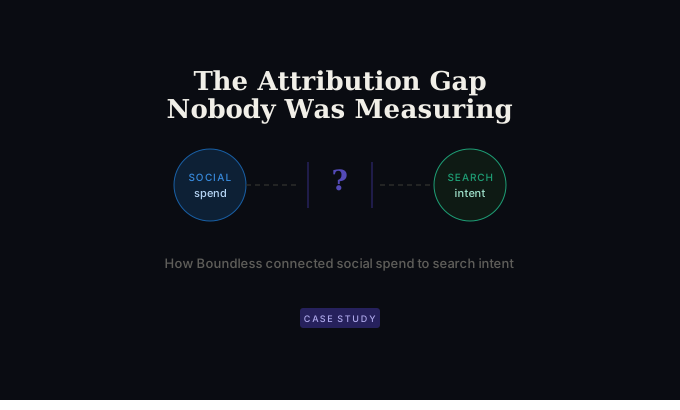
The Attribution Gap Nobody Was Measuring — How Boundless Connected Social Spend to Search Intent
The Problem
Most attribution models are built around last-click logic. Paid social looks weak on paper. Organic looks self-sufficient. And the long middle stretch — where a potential customer is thinking, researching, and quietly forming a preference — goes completely unmeasured.
For Boundless, that middle stretch was everything.
Immigration services don't convert fast. Someone might first encounter the brand weeks or months before they're ready to file. If you're only measuring what closes, you're missing most of the story.
What We Found
When paid social ran, branded search volume climbed. When paid social paused — with zero change to organic output — branded searches fell.
That correlation wasn't a coincidence. It was the attribution gap.
Paid social wasn't converting people directly. It was keeping Boundless present during the consideration phase, so that when someone finally had intent, they searched for the brand specifically. The ads were doing memory work, not conversion work — and no existing model was giving them credit for it.
What We Built
We constructed attribution models that mapped the actual customer path:
Paid social → branded search intent → conversion
Then we forecasted what branded search volume should look like at different levels of social investment, giving the team a leading indicator to work from rather than waiting on lagging conversion data.
The Strategic Shift
Once the model was documented, budget allocation changed:
Organic content stayed the backbone — trust-building, SEO, long-term authority
Paid social got repositioned as an amplification layer, not a direct response channel
Branded search volume replaced CTR and direct conversions as the core paid social KPI
Results
Branded search up 100%+ year-over-year
Display advertising CPL dropped sharply — audiences arriving through paid display already recognized Boundless, making them significantly cheaper to convert
The attribution model gave leadership a defensible framework for sustaining paid social investment during periods when direct conversions were slow
The Takeaway
The most expensive mistake in long-cycle marketing is pulling spend the moment direct conversions dip. Boundless avoided that by measuring what actually mattered — branded search lift as a proxy for future intent. When you can show that paid social moves that needle, the budget conversation changes entirely.